The following morning in Bukittinggi (West Sumatra) brought favorable weather, which we took advantage of by marching across the town.

An early, mist-enshrouded morning from the rooftop of the Lima Hotel.


A parade of youngsters in traditional garb marching through the streets.

Minangkabau princesses.


Those wondrous rumah gadang rooftops... The water buffalo holds an all-important part in Minangkabau life and Bukittinggi's architecture reflects this fact. From tilling the fields and providing meat and milk, to playing a central role in the tribe's creation myth, these giant ruminants are held in high esteem.

The humble trash-picker.

A local gym. Invariably where all the creepy old dudes congregate.


Traditional transportation.


Or a pictorial representation of one...


Panorama Park. At dusk, giant flying foxes (fruit bats) wheel and careen through the air overhead, giving spectators an aerobatic show.

During the latter years of World War II, the Japanese invaded Indonesia and made Bukittinggi their central command post for Sumatra. You can explore the dark, dank, and appropriately labyrinthine Japanese Caves (Lobang Jepang) in Panorama Park.


Despite being a cool respite from the heat, we tired of our underground journey quickly. Putting the creepy back in crepuscular.

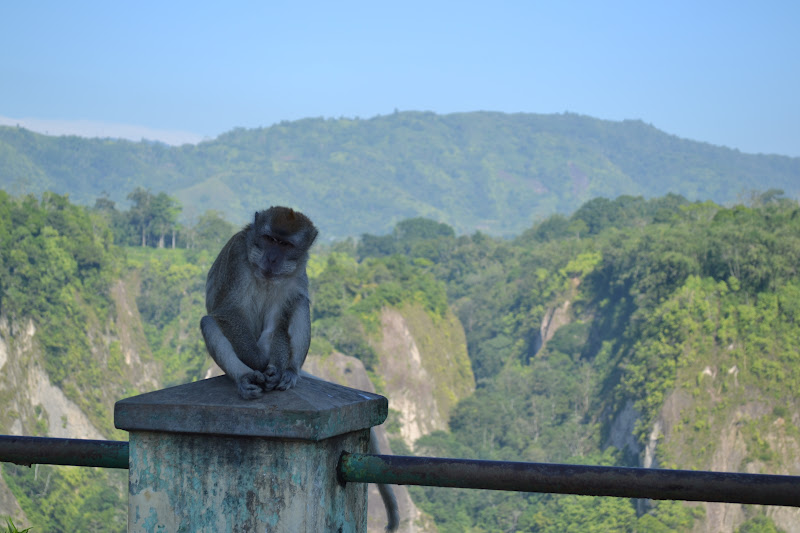
Surly macaques run the show at Panorama Park. Local teens have taken to feeding the monkeys soft drinks and other sweets. Cavities and sugar hangovers now abound in the primate community.


This is where you go when you die in Bukittinggi. A room with a view.


The most-celebrated landmark in town: the clock tower. Constructed by the Dutch, yet crowned with a Minangkabau house after Indonesian independence.


An early, mist-enshrouded morning from the rooftop of the Lima Hotel.


A parade of youngsters in traditional garb marching through the streets.

Minangkabau princesses.


Those wondrous rumah gadang rooftops... The water buffalo holds an all-important part in Minangkabau life and Bukittinggi's architecture reflects this fact. From tilling the fields and providing meat and milk, to playing a central role in the tribe's creation myth, these giant ruminants are held in high esteem.

The humble trash-picker.

A local gym. Invariably where all the creepy old dudes congregate.


Traditional transportation.


Buy your very own ramah minang.


Or a pictorial representation of one...


Panorama Park. At dusk, giant flying foxes (fruit bats) wheel and careen through the air overhead, giving spectators an aerobatic show.

During the latter years of World War II, the Japanese invaded Indonesia and made Bukittinggi their central command post for Sumatra. You can explore the dark, dank, and appropriately labyrinthine Japanese Caves (Lobang Jepang) in Panorama Park.


Despite being a cool respite from the heat, we tired of our underground journey quickly. Putting the creepy back in crepuscular.

Surly macaques run the show at Panorama Park. Local teens have taken to feeding the monkeys soft drinks and other sweets. Cavities and sugar hangovers now abound in the primate community.

This is where you go when you die in Bukittinggi. A room with a view.


The most-celebrated landmark in town: the clock tower. Constructed by the Dutch, yet crowned with a Minangkabau house after Indonesian independence.

Practical information:
To get to Bukittinggi you can either fly into Padang and make the short journey north by car (roughly 2.5 hours) or take an arduous, ridiculously long and uncomfortable bus ride south from North Sumatra (which we did and takes up to 20 hours due to poor road conditions). The plus side on taking the bus is that you will cross the Equator overland, which we thought was cool. Also, if your a fan of blaring Indo-pop and chain-smoking clove cigarettes through the night you'll fit right in on the bus. Happy travels!


